
For many, the appeal is straightforward: they can be tested in their own bed, on their own schedule, with far less disruption to work and family life.
What is a home sleep study in Hobart?
A home sleep study Hobart is a take-home test that measures breathing and other signals overnight to check for sleep-disordered breathing, most commonly obstructive sleep apnoea (OSA). It typically involves a small portable monitor and a few sensors worn while sleeping.
In Hobart, these studies are usually arranged through a GP referral, a sleep physician, or a local sleep clinic that supplies the equipment and interprets the results.
Who is a home sleep study designed for?
It is usually best suited to people with a moderate to high likelihood of obstructive sleep apnoea. Common signs include loud snoring, witnessed pauses in breathing, choking or gasping at night, morning headaches, and excessive sleepiness during the day.
If someone has complex medical conditions or symptoms suggesting a different sleep disorder, a clinician may recommend an in-lab study instead.
How does home testing compare with a sleep lab?
Home testing focuses mainly on breathing-related sleep issues, while a lab study can measure a wider range of signals and sleep stages. The trade-off is convenience: home studies are far easier to fit into everyday life, and many people sleep more naturally in their own environment.
A lab study may be preferable when the diagnosis is unclear, when prior home results are inconclusive, or when other disorders are suspected.
What does the equipment measure at home?
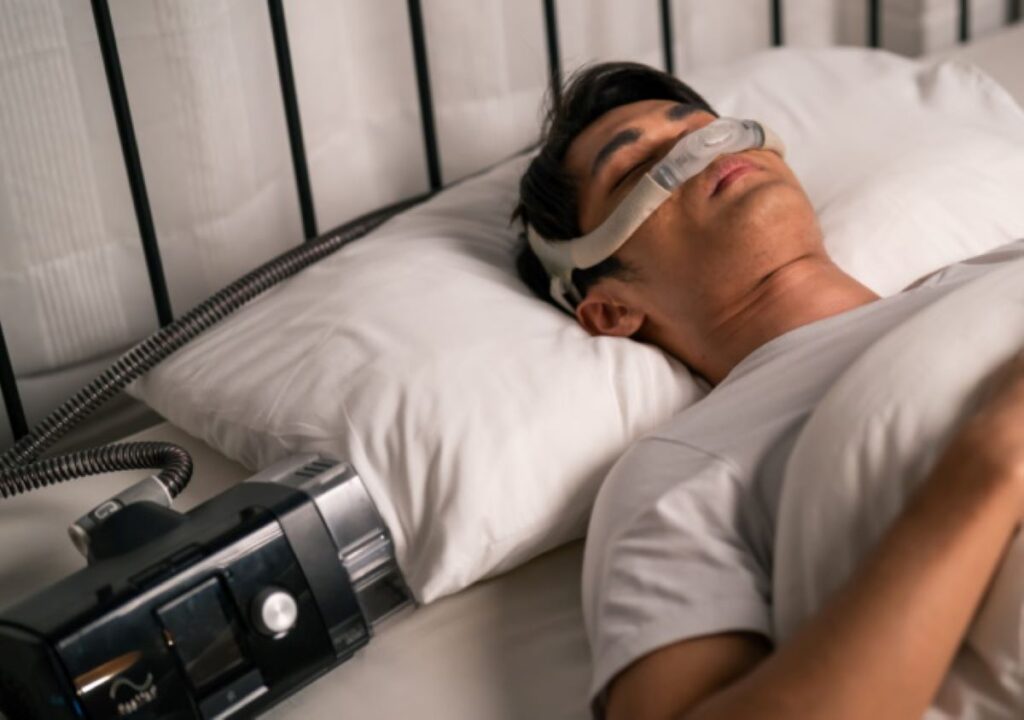
Most home sleep study devices measure airflow, breathing effort, blood oxygen levels, and heart rate. Some setups also include snore microphones or position sensors to show whether symptoms worsen when someone sleeps on their back.
They do not usually measure brain waves in the way a full lab study does, which is why they are primarily used for suspected OSA rather than broader sleep investigations.
Other Resources : Limitations of pulse oximeters and the effect of skin pigmentation
What happens during a home sleep study night?
They take the kit home, apply the sensors as instructed, then sleep as normally as possible. The device records overnight, and the equipment is returned the next day or soon after, depending on the provider.
Clear instructions matter. If sensors fall off or the recording fails, the test may need repeating, so providers typically offer support to help people set it up correctly.
How are results explained, and what do they mean?
A clinician reviews the recording and looks for breathing disruptions and oxygen drops that match sleep apnoea patterns. Results are often summarised using an index that reflects how frequently events occur per hour.
If the study suggests sleep apnoea, the report usually indicates severity and may include recommended next steps, such as treatment trials or further assessment.
What are the next steps if the study suggests sleep apnoea?
Most people move to a discussion about treatment options, guided by symptom severity and overall health. Common approaches include CPAP therapy, oral appliances fitted by a qualified dental provider, and lifestyle measures such as weight management or reducing alcohol close to bedtime.
If results are borderline or inconsistent with symptoms, a clinician may suggest repeat testing or an in-lab study to clarify the picture.
When might an in-lab study still be the better choice?
A lab test can be more appropriate when there is suspicion of conditions beyond obstructive sleep apnoea, such as certain movement disorders, parasomnias, or central sleep apnoea. It may also be recommended for people with significant heart or lung disease, or when home testing does not capture usable data.
In short, home testing is a strong first step for many, but not the only pathway.
How can someone in Hobart access a home sleep study?
They can start with a GP appointment to discuss symptoms and risk factors. From there, a referral to a sleep clinic or sleep physician may be arranged, or a provider may offer a home study pathway directly depending on local services and clinical suitability.
It helps if they bring specifics: snoring history, witnessed apnoeas, daytime sleepiness, blood pressure history, and any relevant medications. Click here to get more about Sleep Test Canberra: When Should You Get Checked?
How can they prepare to get the most accurate result?
They should aim for a typical night of sleep rather than an “ideal” one. That means following a normal routine, avoiding unusual naps, and noting anything that could affect sleep such as alcohol intake, illness, or congestion.
If they normally sleep on their side or use a particular pillow, they should keep that consistent because the goal is to capture a representative night.
What makes home sleep studies appealing for busy households?
They reduce the logistical friction that often stops people getting tested at all. There is no overnight hospital stay, no unfamiliar bed, and usually less waiting for an appointment time that suits work and family responsibilities.
For many in Hobart, that simplicity is the point. A home sleep study offers a realistic, accessible way to confirm whether sleep apnoea is involved so they can move from guessing to treating.
FAQs (Frequently Asked Questions)
What is a home sleep study in Hobart and how does it work?
A home sleep study in Hobart is a convenient, take-home test that monitors breathing and other signals overnight to detect sleep-disordered breathing, primarily obstructive sleep apnoea (OSA). It involves wearing a small portable monitor with sensors while sleeping in your own bed, allowing for testing without hospital disruption.
Who should consider undergoing a home sleep study for suspected sleep apnoea?
Home sleep studies are best suited for individuals with moderate to high likelihood of obstructive sleep apnoea, indicated by symptoms like loud snoring, witnessed breathing pauses, choking or gasping at night, morning headaches, and daytime fatigue. Those with complex medical issues may require in-lab studies instead.
How does a home sleep study compare to an in-lab sleep study?
While home sleep studies focus mainly on breathing-related issues such as OSA and offer greater convenience by allowing testing at home, in-lab studies measure a broader range of signals including brain waves and sleep stages. Lab studies are preferred when diagnoses are unclear or other disorders are suspected.
What types of data do home sleep study devices measure during the night?
Home sleep study equipment typically records airflow, breathing effort, blood oxygen levels, and heart rate. Some devices also include snore microphones and position sensors to assess symptom variations based on sleeping posture. However, they generally do not record brain wave activity like full lab studies.
What should I expect during the night of a home sleep study?
You will take the testing kit home and apply the sensors as instructed before going to bed. The device records your breathing patterns overnight while you try to maintain your normal sleeping routine. Afterward, you return the equipment for analysis. Support is usually provided to ensure proper setup and accurate results.
How can someone in Hobart access a home sleep study and prepare for it effectively?
Begin by consulting your GP to discuss your symptoms and risk factors for sleep apnoea; they can provide referrals to local sleep clinics or physicians who offer home study services. To prepare, maintain your usual bedtime routine, avoid unusual naps or alcohol before bed, and use your regular pillows or sleeping positions to ensure representative results.